Mathematics at St Matthew’s Primary School
—
Download: Mathematics – Foundational Knowledge 2026 [PDF]
Download: Mathematics – Curriculum Overview 2025-2026 [PDF]
View our Mathematics Policy on our Policies page.
Strong Foundations for Mathematics
In St Matthew’s, we understand the importance of securing strong foundations in maths.
In order to do this, we use the Mastering Number programme from NCETM. This programme helps secure firm foundations in the development of good number sense for all children from Reception through to Year 1 and Year 3. The aim over time is that children will leave KS1 with fluency in calculation and a confidence and flexibility with number.
Attention will be given to key knowledge and understanding needed in Reception classes, and progression through KS1 and Year 3 to support success in the future.
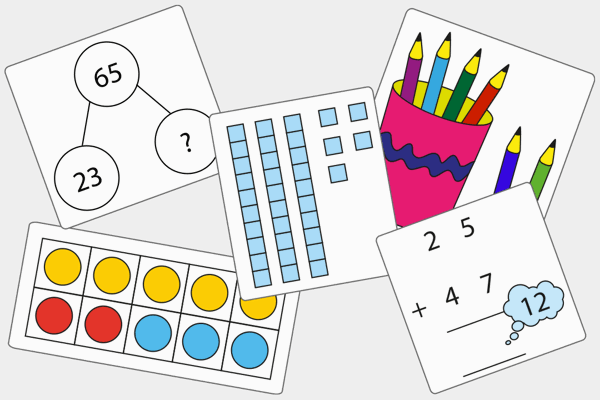
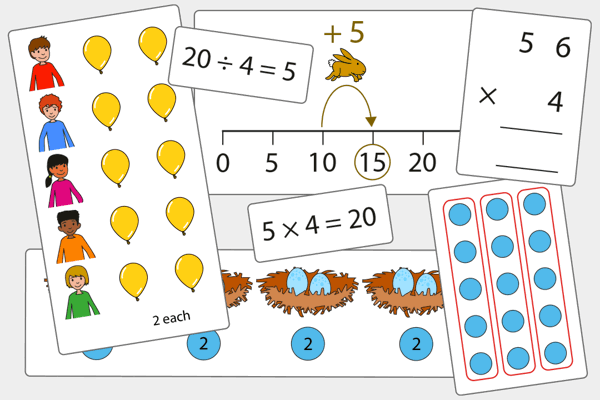
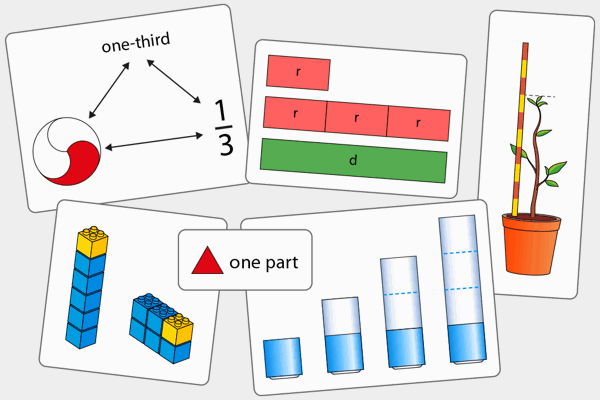
We’ve split the curriculum up into a small number of areas – we call these ‘spines’
- Spine 1: Number, Addition and Subtraction,
- Spine 2: Multiplication and Division and
- Spine 3: Fractions
Supporting Your Child
How to Help at Home:
Reception
Counting in Everyday Life
- Make counting natural:
- Count steps as you walk upstairs
- Count snacks: “Let’s count 5 grapes”
- Count toys when tidying up
- “How many are there?”
- “Can you count them again?”
Number Formation (Writing Numbers)
- Practice writing numbers in fun ways:
- In sand, shaving foam, or with chalk
- Don’t worry about perfection—focus on recognition first
Simple Adding & Taking Away
- Use real objects (best way to learn):
- “You have 2 biscuits, here’s 1 more—how many now?”
- “You had 4 toys, take 1 away—how many left?”
- Let them physically move objects—this builds real understanding.
Number Recognition Games
- Write numbers (1–10) on paper and hide them around the room
- Ask them to find a number: “Can you find number 5?”
- Match numbers to objects (e.g., 3 blocks with number 3)
Compare Quantities
- Use simple language:
- “Which plate has more?”
- “Who has fewer sweets?”
- “Is this group bigger or smaller?”
Shapes Around the House
- Go on a shape hunt:
- Circle → plates
- Square → windows
- Triangle → slices of pizza
- Ask: “What shape is this?”
Patterns
- Make patterns with toys:
- “What comes next?”
- Use socks, blocks, or food
Year 1
Counting
- Practise counting forwards and backwards to 20 (and beyond if your child is ready).
- Start counting from different numbers, not just 0 (e.g. start at 7 and count on).
- Count everyday objects like toys, coins or pieces of fruit. Encourage your child to move each object as they count.
- Practise counting in 2s, 5s and 10s (e.g. 2, 4, 6…).
- Play simple board games with dice to practise counting on.
- Look for numbers around you (house numbers, prices in shops, number plates).
- Try “missing number” games (e.g. 5, 6, __, 8).
Number Facts
- Practise number bonds to 10 and 20 (e.g. 7 + 3 = 10, 14 + 6 = 20).
- Use real objects (like counters or food) to help your child see how numbers work.
- Practise simple addition and subtraction using everyday situations.
- Ask questions like: “If you have 5 apples and eat 2, how many are left?”
Early Multiplication & Division
- Practise counting in groups (e.g. groups of 2 socks or 5 fingers).
- Use language like “groups of”, “lots of” and “shared equally”.
- Share objects into equal groups (e.g. share 10 sweets between 2 people).
Real-life Maths
- Let your child help when shopping by counting items or simple totals.
- Talk about time (morning, afternoon, evening) and read o’clock times on clocks.
- Cook or bake together and talk about measuring and counting ingredients.
- Encourage your child to solve simple problems in everyday situations.
Year 2
Counting & Number Skills
- Practise counting forwards and backwards up to 100.
- Explore patterns in numbers (odd/even numbers, counting in 2s, 5s, 10s).
- Use number bonds to 20 and practise quick recall.
Addition & Subtraction
- Solve problems using everyday objects (e.g., “You have 12 pencils, give 5 to your friend – how many are left?”).
- Practise written addition and subtraction with regrouping.
Early Multiplication & Division
- Count in multiples of 2, 3, 5, and 10.
- Use objects to show sharing and grouping (division).
- Encourage quick recall of times tables (2, 5, 10).
Real-life Maths
- Help add coins and calculate simple totals when shopping.
- Discuss time using clocks and simple schedules.
- Bake together and measure ingredients accurately.
Year 3
Number & Place Value
- Practise counting in hundreds, tens, and ones.
- Explore place value with 3-digit numbers.
Addition, Subtraction, Multiplication & Division
- Solve two-step word problems (e.g., “If I have 24 sweets and eat 7, then get 15 more, how many do I have?”).
- Learn times tables up to 12 × 12.
- Use repeated addition or arrays to understand multiplication.
Fractions & Measures
- Practise simple fractions (½, ¼, ⅓).
- Measure lengths, weights, and capacities in everyday activities.
Real-life Maths
- Work out totals and change when shopping.
- Read timetables and calculate journey times.
- Cook or bake and adjust recipes for different numbers of people.
Year 4
Number & Place Value
- Practise counting in 1000s and understanding place value to 4 digits.
- Round numbers to the nearest 10, 100, or 1000.
Times Tables & Mental Maths
- Ensure fluency in times tables up to 12 × 12.
- Use multiplication and division to solve practical problems.
Fractions, Decimals & Measures
- Explore fractions, decimals, and equivalent values.
- Practise converting units (e.g., cm → m, g → kg).
Real-life Maths
- Calculate totals, change, and discounts when shopping.
- Plan trips using timetables and calculate journey durations.
- Scale recipes up or down when cooking.
Year 5
Number & Place Value
- Practise reading, writing, ordering, and comparing numbers up to 1,000,000.
- Round numbers to the nearest 10, 100, 1000, or 10,000.
Times Tables & Mental Maths
- Ensure quick recall of times tables and related division facts.
- Use multiplication and division to solve multi-step problems.
Fractions, Decimals & Percentages
- Add, subtract, multiply, and divide fractions.
- Convert between fractions, decimals, and percentages.
- Solve practical problems involving money, time, and measures.
Real-life Maths
- Calculate discounts and percentages while shopping.
- Measure and scale ingredients accurately in recipes.
- Plan journeys and check timings using timetables.
Year 6
Number & Place Value
- Work with large numbers, decimals, and negative numbers.
- Round numbers to a given degree of accuracy.
Arithmetic & Problem Solving
- Solve multi-step problems using all four operations.
- Practise mental maths strategies and written methods for long multiplication, division, addition, and subtraction.
Fractions, Decimals, Percentages & Ratio
- Work with fractions, decimals, percentages, and ratio in practical problems.
- Convert between fractions, decimals, and percentages.
Real-life Maths
- Calculate totals, discounts, and interest in money problems.
- Use timetables, distance, and time to plan journeys.
- Scale and adjust recipes or measurements accurately.
- Encourage reasoning and explaining their answers to develop confidence and fluency.
Useful Maths Resources
Here are some links to websites that we recommend to help consolidate and extend your child’s learning in maths:
NumBots
An online platform that supports your child with their basic maths in Keystage 1.
TTRS
A fun and engaging online timetables programme which supports your child’s ability to recall their times tables.
Mr Barton Maths
Great for games and practise questions.
https://mrbartonmaths.com/numeracy-games/
Mathsbots
Fantastic resource especially for Year 5 and 6 as the website provides pasts SATs
papers.
https://mathsbot.com/
BBC Bitesize
KS1 – https://www.bbc.co.uk/bitesize/subjects/zjxhfg8
KS2 – https://www.bbc.co.uk/bitesize/subjects/z826n39